
Our Materials
Start with the wood.
Every Timber & Tulip piece is made to order, so the materials are yours to choose. Here's what we work with - the woods, the finishes, the metals and a few favorite fabrics - and how each one looks and lives.

A finish is a pairing
Each finish is a wood species and a stain (or no stain) together. Natural Walnut and Sable Walnut are the same wood, two different finishes.
Built for everyday use
Every finish gets a commercial-grade 2K poly topcoat, so tables and desks hold up to real life - softer woods and burls included.
Made to order
Your piece is built by hand in Minnesota in the finish you choose, in 8-10 weeks once the details are set.
Our finishes
Sixteen finishes, four to start with
Photos are of real wood, so expect variation from board to board - that's part of the point.
Signature
Four finishes that capture what we do best. If you're not sure where to begin, begin here.
Sable Walnut
A stain that takes walnut a shade cooler and deeper, holding that richness in place rather than letting it mellow with age. The color settles into the grain, so the figure reads as clearly as natural walnut.

Walnut Burl
Dark chocolate-brown swirling with dramatic burl figure and lighter honey streaks. A clear coat over the natural wood, left live-edged and often paired with black resin.

Maple Burl
A honey-cream field covered edge to edge in small dark burl eyes, with deeper streaks running through. A clear coat over the natural wood, usually left with its live edge and often paired with resin.

Smokey White Oak
A soft gray stain that mutes White Oak's natural warmth - the grain shows just as clearly, in shades of gray rather than gold. Quiet and contemporary.
Natural
A clear coat over the wood's own color
Walnut
Warm brown with darker, cooler lines drifting through it in soft waves. A clear coat brings up the richness already in the grain rather than adding any of its own.

White Oak, Quarter Sawn
A time-honored cut that opens the grain to reveal small shimmering ray flecks - a detail only this cut produces. A water-based clear coat keeps the tone pale and cool.

White Oak, Rift Sawn
Long, straight lines running the full length of each board - the most linear, architectural cut we offer. A water-based clear coat keeps the tone pale and cool.

Black Limba
Pale golden-blonde streaked with bold near-black veining and warm orange - high contrast, almost graphic. A water-based clear coat keeps the background clean so the contrast stays sharp.
Stained
Color that settles into the grain
Ebony White Oak
A warm black over White Oak - deep and soft rather than stark, with brown undertones that keep it from reading cold. The grain shows through clearly, never painted or flat.

Alabaster White Oak
A pale, cool stain that lightens White Oak without masking it - the grain reads through in soft white rather than gold. The choice when oak needs to feel light and quiet.

Onyx
A cool, true black that sinks into the grain instead of sitting on top of it, in satin or matte. At its best on strong-grained woods like oak, where the pattern reads clearly through the color.

Coffee Oak
A warm medium-brown stain, about the color of a good cup of coffee, that lets the oak grain read clearly through it. Versatile enough to sit with almost any palette.
Burl and natural edge
Figure and form straight from the tree
Mappa Burl
Pale cream dense with dark, swirling veining - closer to abstract art than to wood grain. A clear coat over the natural burl, with no stain to compete with the figure.

Teak, Natural Edge
Golden-brown and faintly oily to the touch, with straight, even grain. A water-based clear coat holds that golden tone rather than pushing it amber, and the natural edge keeps the tree's own silhouette.

Mangowood, Natural Edge
Sandy tan to caramel, marked with dark winding lines and paler cream patches - no two boards alike. A water-based clear coat over the natural wood, left with its organic edge.

Monkeypod, Natural Edge
Golden-brown with dramatic sweeping grain that curves like water, marked by natural fissures and small pin knots. A clear coat over the natural wood, left with its live edge.
Know your wood
The species behind the finishes
Every finish starts with a species. A little about each one - how it looks, how hard it is, and where it's happiest.
Black Walnut
Warm brown heartwood threaded with darker, cooler lines that move in soft, irregular waves. Moderately hard and very stable, which is why it's been a furniture wood for two centuries. Walnut is also one of the few woods that lightens with age, mellowing toward honey - if you'd rather it hold its depth, our Sable Walnut finish keeps that richness while still reading as natural walnut.
White Oak
A light brown hardwood, often with a faint olive cast, and a straight, tight grain. Its pores are naturally sealed in a way Red Oak's aren't, making it denser and far more water-resistant. Flat-sawn White Oak moves with the seasons, which is why we use rift and quarter sawn cuts for pieces that need to stay flat.
Red Oak
Built like White Oak but with a warmer, faintly pink cast and more open pores. Those pores are why Red Oak takes stain so well - deep colors land evenly and the grain still reads clearly through even the darkest finishes. An interior wood; White Oak is the one for anything that meets moisture.
Maple Burl
Starts from one of the hardest woods we work with - fine, even grain and a pale creamy tone. In burl form that tight grain gives way to dense clusters of small dark eyes and swirling figure. Burl is grown, not milled, so no two slabs repeat.
Mappa Burl
Burl cut from black poplar - a pale cream field dense with dark, swirling veining that reads differently from every angle. It's softer than our other burls, so Mappa pieces get a commercial-grade finish built to hold up to real use.
Teak
A golden-brown hardwood, faintly oily to the touch, straight-grained with a coarse, even texture. Those natural oils make it the standard for decay and moisture resistance. It deepens toward amber indoors and silvers outdoors if left unfinished.
Black Limba
High contrast and unusually graphic - a pale golden-blonde field streaked with bold, irregular near-black veining and warm orange. Black and White Limba come from the same tree; black refers to the figured, streaked portion of the log, so no two boards match. Softer than the oaks, and happiest on surfaces that aren't taking daily impact.
Mangowood
Shifts from warm cream to deep brown within a single board, sometimes with pink or near-black passages where spalting has moved through the wood. Mango is milled from orchard trees at the end of their fruit-bearing lives, making it one of the few hardwoods that's a byproduct rather than a harvest. Moderately hard, and strictly interior.
Monkeypod
Deep brown heartwood set against lighter, honey-colored sapwood, with sweeping grain that curves and flows. Monkeypod grows wide - three to four feet through the trunk - so it yields single-slab natural-edge tops most species can't produce without a glue line. Very durable and moderately hard.
Metal finishes
Wood and metal, together
Our steel bases and accents come in three commercial-grade finishes, chosen to sit alongside the wood rather than compete with it.
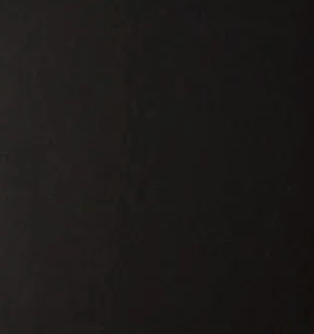
Matte Black
Our go-to black for steel - a commercial-grade powdercoat, flat and even with no sheen. Classic and clean, and built to stay that way.
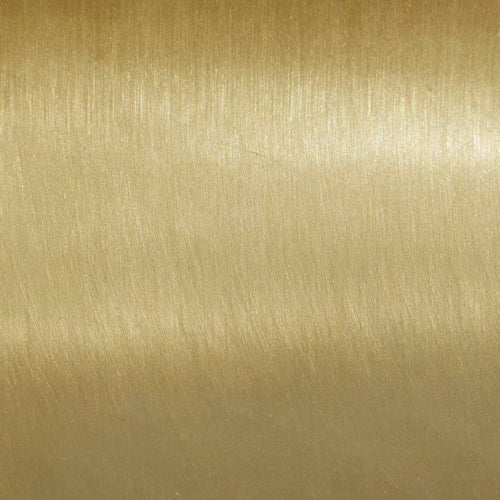
Brushed Brass
Solid brass with a fine directional brushing that softens the shine into a warm satin glow. A commercial-grade topcoat seals it, so it holds that finish rather than darkening into patina.
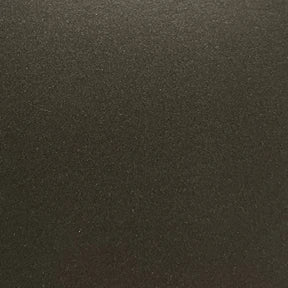
Oil Rubbed Bronze
A near-black powdercoat flecked with fine gold and copper, with a granular texture closer to aged bronze than to painted color. Grittier and warmer than Matte Black.
Fabrics and hides
A few favorites
For upholstered pieces, these are the fabrics and hides we keep coming back to. The full library lives in the studio.

Signature Weave
A textured wave-and-stripe weave in charcoal, warm taupe and ivory. The pattern moves vertically, adding depth without taking over the room, and it's built to wear well.

Pop Art in Canvas
An Italian wool-blend woven in a tight grid of raised ivory dots on a warm taupe ground. Playful up close, quietly textural from across the room, and made for heavy upholstery.

Dusty Beige Shearling
Genuine hair-on sheepskin in a soft dusty beige, with natural tonal variation across every hide. Plush, warm and nothing like a woven fabric.

Dark Olive Leather
A soft, drapey Italian leather in a deep forest green with a true matte finish. Pure aniline, so nothing sits on the surface - it wears in, picks up character and develops a rich patina with use.
Have a fabric of your own in mind? Ask us about COM (customer's own material) at your consult.

See it in person
Come see the wood in person.
Wood photographs well, but it's better in your hands. Come by the studio to see finishes, metals and fabrics side by side, or book a free consult and we'll walk through them with you.
Northrup King Building, Studio 206
1450 Van Buren St NE, Minneapolis, MN 55413